Decision Aids and Action Plans
- Live with confidence instead of fear
- Make treatment decisions with their health care team
- Feel empowered in managing their conditions
Decision Aids
AAFA’s decision aids on asthma and allergy care options help guide shared decision-making between people with asthma and allergic diseases and their doctor.
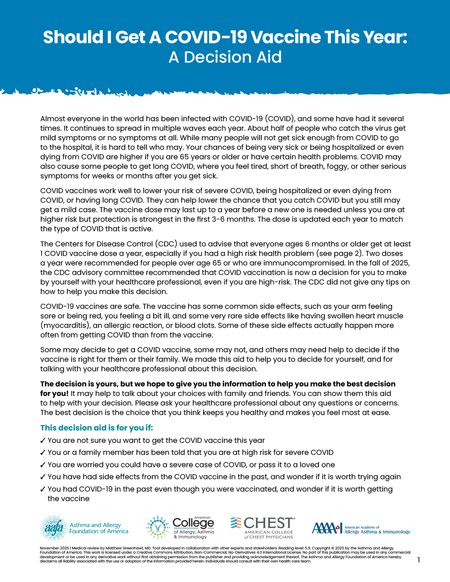
COVID-19 Vaccine Decision Aid
The decision aid, Should I Get A COVID-19 Vaccine This Year [2], provides information about risk factors for severe illness from COVID. It also answers some common questions about the vaccine. This decision aid is for people who:
- Are not sure they want to get the COVID-19 vaccine this year
- Are at high risk for severe COVID-19 or have a family member at high risk
- Are worried they could have a severe case of COVID-19, or pass it to a loved one
- Have had side effects from the COVID-19 vaccine in the past, and wonder if it is worth trying again
- Have had COVID-19 in the past, even though vaccinated, and question if it is worth getting the vaccine
 [2]
[2]
Sinus Checklist for Nasal Polyps
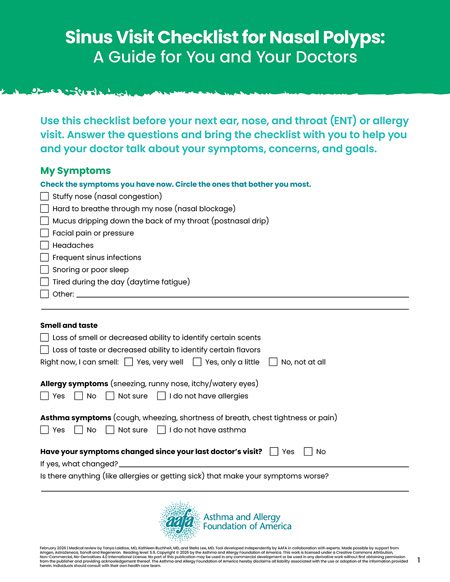
The Sinus Visit Checklist for Nasal Polyps: A Guide for You and Your Doctors [3], helps people with nasal polyps talk with their doctor about symptoms, concerns, and goals when managing nasal polyps. This checklist can be used to discuss:
- Nasal polyps symptoms
- How nasal polyps affects quality of life
- Current and past treatments
- Sinus surgery history
- Choosing a treatment
- Questions and topics for the visit
- Next steps
 [3]
[3]
Epinephrine Decision Aid
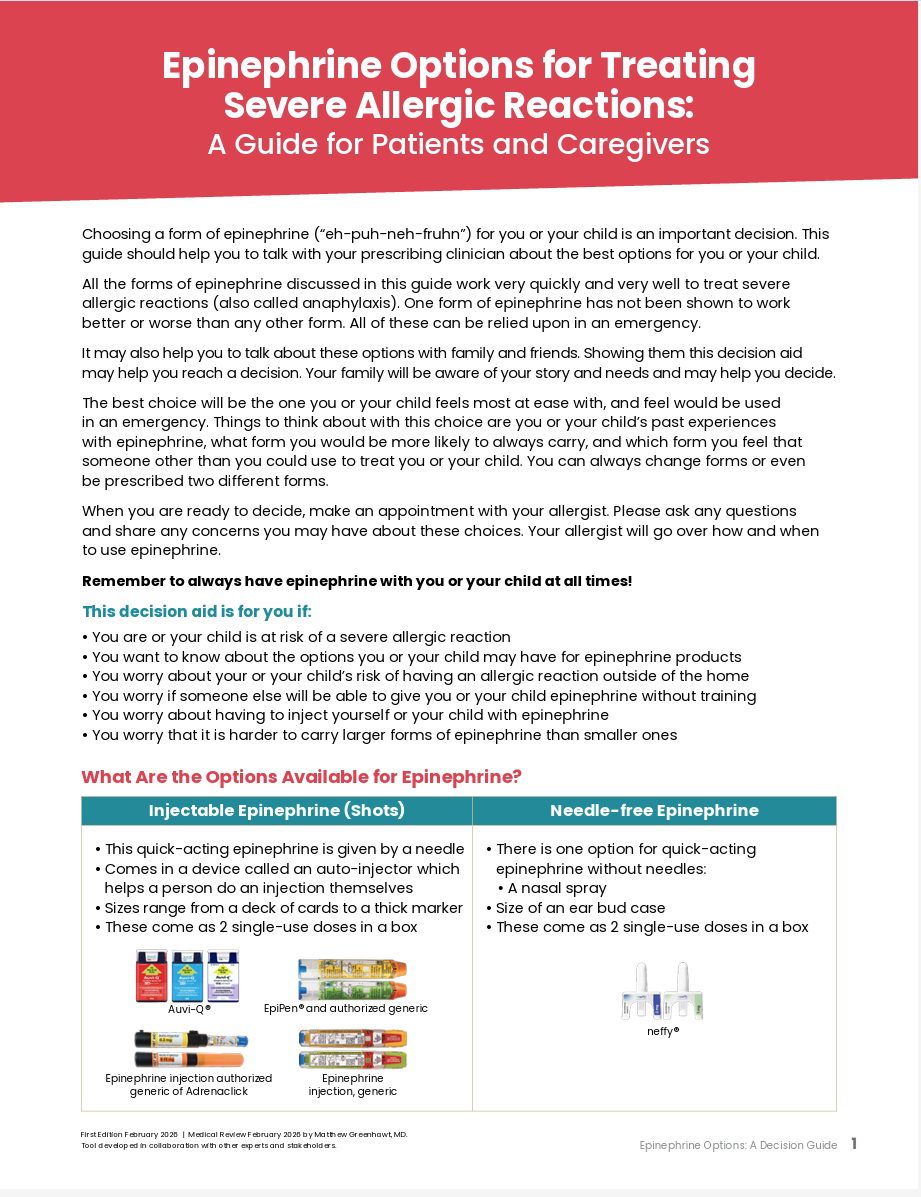
Epinephrine Options for Treating Severe Allergic Reactions: A Guide for Patients and Caregivers [4] can help people decide which epinephrine delivery device is right for them and/or their child. This decision aid is for people who:
- Are at risk of a severe allergic reaction
- Want to know the options for epinephrine products
- Worry about risks of allergic reactions outside the home
- Worry if someone else will be able to give epinephrine without training
- Worry about having to do an injection
- Have concerns about carrying the products
 [4]
[4]
Oral Immunotherapy Decision Aid
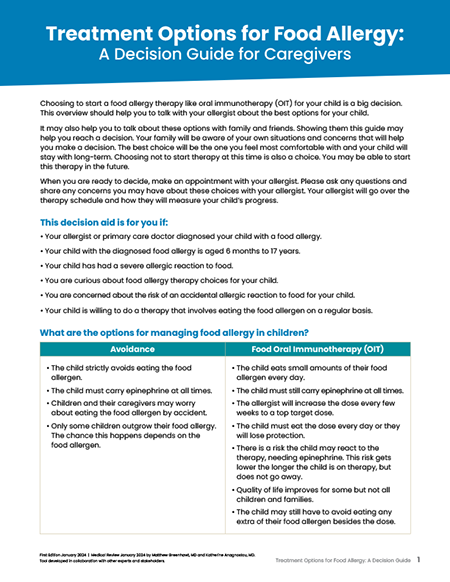
Treatment Options for Food Allergy: A Decision Guide for Caregivers [5] can help people decide if OIT is right for them and their child. This decision aid is for people who:
- Have a child diagnosed with a food allergy by their allergist or primary care doctor
- Have a child with a diagnosed food allergy aged 6 months to 17 years
- Have a child who has had a severe allergic reaction to food
- Are curious about food allergy therapy choices for their child
- Are concerned about the risk of an accidental allergic reaction to food for their child
- Have a child who is willing to do a therapy that involves eating the food allergen on a regular basis
 [6]
[6]
Healthy Homes Checklist
Having good indoor air quality is an important part of having a healthy living space. According to the Environmental Protection Agency (EPA), people in the U.S. spend about 90% of their time indoors where they are exposed to concentrations of pollutants often 2 to 5 times higher than typical outdoor pollution. The Asthma-Friendly Home Checklist (available in in English [7] and Spanish [8]) helps people with asthma learn about and control their asthma triggers. Following this checklist can help people improve their indoor air quality and reduce asthma triggers in their home. AAFA’s interactive Healthier Home Checklist [9] can show people with asthma how to reduce sources of allergens and asthma irritants in each room of their home.
Action Plans
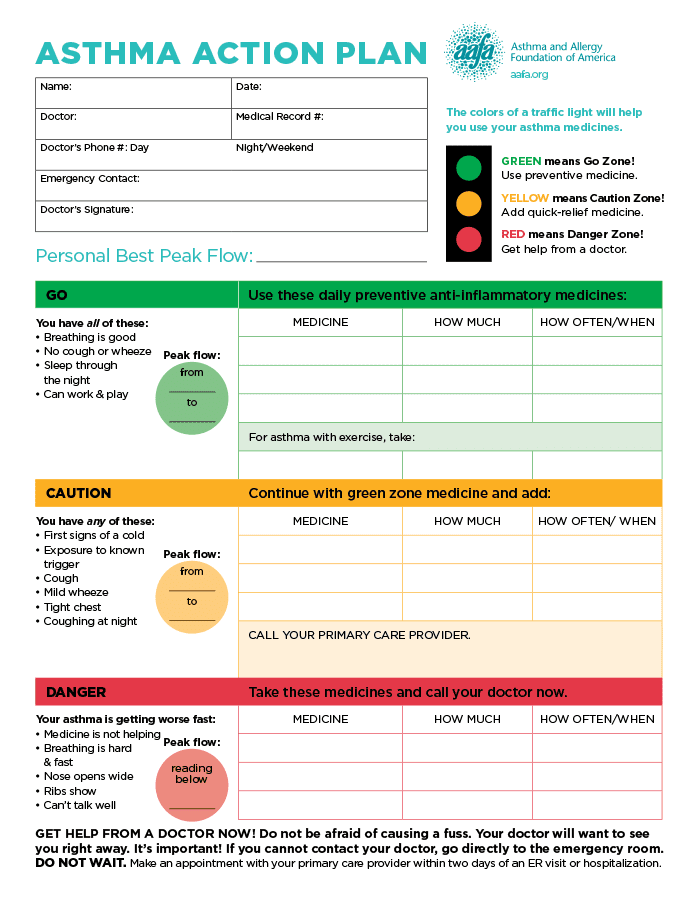
AAFA’s action plans help people with asthma and food allergies recognize symptoms and initiate prompt treatment to manage their condition. Current action plans include:
Pregnancy and Lactation Asthma Action Plan
AAFA and the American Academy of Allergy, Asthma & Immunology (AAAAI) created the Pregnancy and Lactation Asthma Action Plan (available in English [14] and Spanish [15]) to help pregnant and lactating people manage asthma during pregnancy and postpartum stages. The action plan includes asthma medicines and actions to take based on asthma zones, recognizing when asthma symptoms get worse, and what to do in an emergency.  [14]
[14]
School or Child Care Asthma/Allergy Action Plan
The School or Child Care Asthma/Allergy Action Plan [16] can be provided to a child’s school or child care center to help manage asthma and allergies in the classroom. This plan includes sections for asthma/allergy triggers, environmental control measures, daily medications plan for asthma/allergy, outside activity and field trips, asthma and/or allergy emergency plan, and signs and symptoms of severe asthma episodes or allergic reactions.  [16]
[16]
Food Allergy Emergency Care (Anaphylaxis) Plan for Children
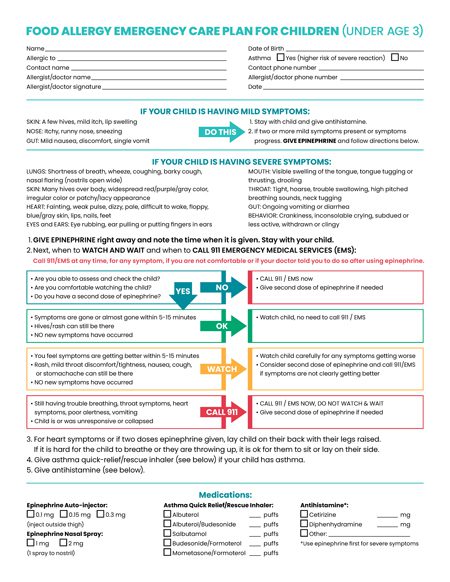
AAFA’s validated Food Allergy Emergency Care Plan provides information and instructions on how to manage an allergic reaction. It includes symptoms to watch in infants/toddlers or children ages 3 and older (including teens and adults), instructions for using epinephrine, and what to do in an emergency. The food allergy emergency care plan (under age 3, and age 3 and up) is available in multiple languages.
- English (under age 3 [6], and age 3 and up [17])
- Spanish (under age 3 [18], and age 3 and up [19])
- Arabic (under age 3 [20], and age 3 and up [21])
- Bengali (under age 3 [22], and age 3 and up [23])
- Burmese (under age 3 [24], and age 3 and up [25])
- Chinese (under age 3 [26], and age 3 and up [27])
- Indonesian (under age 3 [28], and age 3 and up [29])
- Khmer (under age 3 [30], and age 3 and up [31])
- Korean (under age 3 [32], and age 3 and up [33])
- Portuguese (under age 3 [34], and age 3 and up [35])
- Russian (under age 3 [36], and age 3 and up [37])
 [6]
[6]
 [38]
[38]