Allergy Treatments
Allergy Medicine Guide:
What Are the Best Treatments for Allergies?
Good allergy treatment is based on your medical history, what type of allergy you have, and if your symptoms are mild or severe. Your allergy treatment plan may include 3 strategies: avoiding allergens, taking medicines, and/or doing a treatment that changes your immune system response to allergens.
How Do I Avoid Allergens?
If you have an allergy, the most important step is to avoid your allergen (a substance that causes an allergic immune reaction) as much as possible. Limiting your exposure to the allergen will reduce your symptoms. However, you may also need medicines to control allergy symptoms.
You will need to know what you are allergic to and then take steps to remove the source of allergen(s) from your home and other places you spend time. Use AAFA’s Healthier Home Checklist [2] to guide you.
Nasal saline rinse
Using a saline (saltwater) nose rinse can help cut down mucus and rinse allergens like pollen, animal dander, or dust mites out of your nose. Remember to use these as directed. If you make your own saline, use distilled or boiled sterilized water. Nasal rinse options include OTC prepackaged nasal saline sprays, sinus rinse squeeze bottles, nasal irrigation systems, or neti pots.
Watch: How to Help Kids Do Nasal Sprays and Nasal Rinses [3]
What Medicines Can I Take for Allergies?
There are over-the-counter (OTC) and prescription (Rx) medicines to treat or prevent allergy symptoms. For seasonal allergies, start allergy medicines a couple weeks before your allergy season begins for best results. Your allergy treatment plan may include different, common types of treatment:
Corticosteroids [kor-tick-OH-stair-ROIDz]
Corticosteroid nasal (nose) sprays
These types of nasal sprays reduce inflammation (swelling) in the nose and block allergic reactions from developing. They are the most effective medicine type for allergic rhinitis (nose allergy symptoms) because they can reduce all nasal symptoms, including congestion (stuffiness). They can also provide some relief for eye allergy symptoms. Nasal corticosteroids have few side effects such as headache, nose bleeds, or irritation. Many are available over the counter without prescription.1,2,3
Corticosteroid creams or ointments relieve itchiness and stop the spread of rashes. See your doctor if your rash does not go away after using this cream for a week. These may be available by prescription or over the counter and come in a variety of strengths and formulations.4
Oral corticosteroids (OCS) may be prescribed to reduce swelling and stop severe allergic reactions. OCS medicines [4] can cause serious side effects and should not be used long term.2,5
Antihistamines
Antihistamines relieve sneezing and itching in the nose and eyes. They also reduce a runny nose and, to a lesser extent, nasal stuffiness. Look for a long-acting, non-drowsy antihistamine. The newer forms do not carry the risk of toxicity (like feeling drowsy) that has been associated with older antihistamines like diphenhydramine.6 Certain antihistamines may come as nasal sprays.
- Pregnancy
Cetirizine (ZYRTEC®) and loratadine (Claritin®) are the antihistamines of choice for use during pregnancy. They have established safety profiles and are effective in treating allergy symptoms during pregnancy.7,8 - Antihistamine Warning
Do not use short-acting antihistamines to treat allergies. These include diphenhydramine (Benadryl®), promethazine (Phenergan®), and hydroxyzine (Vistaril®). These are not good choices for allergy symptoms because of their short-term action to manage symptoms and several known negative side effects. The major side effects of these older antihistamines include drowsiness, sedation, dry mouth/eyes, and fatigue. Use of these antihistamines can impair alertness, concentration, multitasking, and memory. In turn, these antihistamines can affect important functions, such as learning and test performance in children, as well as operation of machinery and cars in adults. As these medicines can impair you, they can affect work performance and safety. Side effects may get worse with higher dosing that is used for other conditions such as chronic hives. Diphenhydramine and older generation antihistamines are also associated with an increased risk for dementia with long-term use in older adults.6,9,10 According to Food and Drug Administration (FDA), newer oral antihistamines are technically not non-drowsy, but most people are able to take these medicines without any drowsiness.
Decongestants
Decongestants help shrink the lining of the nasal passages and relieve nasal stuffiness.
Some allergy medicines combine an antihistamine with a decongestant.
Decongestant Warning
Nasal decongestants should only be used for a short time (usually no more than 3 days). Extended use of decongestant nasal sprays can cause a rebound effect that worsens your congestion. Read the instructions carefully and do not use them for extended amounts of time. Make sure you talk with your doctor about the appropriate use of decongestants, limitations, and potential side effects.11
Check with your doctor before using decongestants if you have high blood pressure, heart disease, glaucoma, diabetes, thyroid disease, or trouble urinating. They may cause issues if you have any of these conditions and they may interact with other prescription medicines.11
Federal Regulations on Decongestants
The oral form of phenylephrine (PE) is a common active ingredient in many OTC decongestants. In 2024, an expert panel of the FDA reviewed studies which showed oral PE is not effective at relieving nasal congestion in commonly used doses. The FDA is proposing to end use of oral PE. This would remove these products from the U.S. market. The change would not affect the nasal spray forms of PE.12
Certain types of combo medicines (such as the ones that contain pseudoephedrine as the decongestant) are available “behind the counter.” Behind-the-counter products are available without a prescription but have limits on purchases due to state and federal laws. Talking with pharmacy staff and showing ID is generally necessary to obtain these types of allergy medicines.11
Mast cell stabilizers
Cromolyn sodium is a mast cell stabilizer that comes in a nasal spray. It blocks your body from releasing chemicals that cause allergy symptoms, including histamine and leukotrienes. This medicine has few side effects, but you must take it 3 to 6 times a day. For best results, this medicine should be used daily during your allergy season. You can start it up to 1 week before your allergy season begins.13
Leukotriene [loo-koh-tri-een] blockers
Leukotriene receptor antagonists (or modifiers) block the action of important chemical messengers (other than histamine) that are involved in allergic reactions. These medicines help manage asthma and allergic rhinitis symptoms. They are taken orally (by mouth). How often you take them depends on the specific drug. Discuss the appropriate use of these medicines with your doctor, including the risks and benefits of therapy.14
BLACK BOX WARNING
Montelukast (brand name SINGULAIR®) has a black box warning because it can cause serious mental health side effects. This is a safety warning from the FDA. This means you need to be aware of a drug’s side effects or important instructions for safe use of the drug. We encourage you to speak with your health care provider before, during, and after the start of any new medicine. If your doctor recommends montelukast, talk with them about possible risks and concerns.
Immune system therapies
Biologic drugs (or biologics) are complex medicines that are made by using living things, such as animals, plants, or bacteria. Many of these biologics are antibodies, which are proteins that are designed to block specific molecules (tiny particles) in the human body.15 Allergy and asthma biologics work by targeting cells and molecules involved in the body’s immune system and inflammation process. Unlike most drugs that are made with chemical synthesis, biologics are made with biotechnology and other cutting-edge technologies. They may offer the most effective means to treat conditions that are not well controlled by conventional treatment. Currently, the only allergy and asthma biologic drugs available are administered by injection (shot) or infusion (IV).
- Omalizumab (Xolair® and Omlyclo) is a monoclonal antibody and is indicated in adults and children aged 1 year and older for the reduction of allergic reactions to food allergens, including anaphylaxis (a severe allergic reaction). People prescribed omalizumab should still avoid the food allergen while taking the medicine. Omalizumab should not be used for the emergency treatment of allergic reactions, including anaphylaxis. Omalizumab is also approved as treatment for moderate to severe allergic asthma, chronic rhinosinusitis with nasal polyposis, and chronic spontaneous urticaria (chronic hives).16
Immunotherapy is a treatment option for some types of allergies. There are different types of immunotherapy:
- Allergy shots involve giving injections of allergens in an increasing dose over time. The person becomes progressively less sensitive to that allergen. Allergy shots can work well for some people with allergies to pollen, pets, dust, mold, bees or other stinging insects, as well as asthma. Allergy shots do not work for allergies to food and should not be used to treat food allergies. While allergy shots are fairly safe, there is a chance for a severe, life-threatening allergic reaction to the injections, so they must always be given in an allergist’s office under observation from a medical professional.17,18
- Sublingual immunotherapy (SLIT) is another way to treat certain allergies without injections. Allergists give patients small doses of an allergen under the tongue. This exposure improves tolerance to the substance and reduces symptoms. SLIT is fairly safe and effective for the treatment of nasal allergies and asthma. SLIT tablets are currently available for dust mites (Odactra), grass (Grastek and Oralair), and ragweed (Ragwitek). Talk to your allergist if you want to learn more about SLIT.19
- Oral immunotherapy (OIT) is a food allergy treatment that retrains your immune system to respond differently to food. It is not a cure for food allergies. The goal of OIT is to reduce the changes of allergic reactions. OIT should only be done with the guidance and supervision of an allergist. For more information: kidswithfoodallergies.org/oit [5]
Epinephrine [ep-uh-NEF-rin]
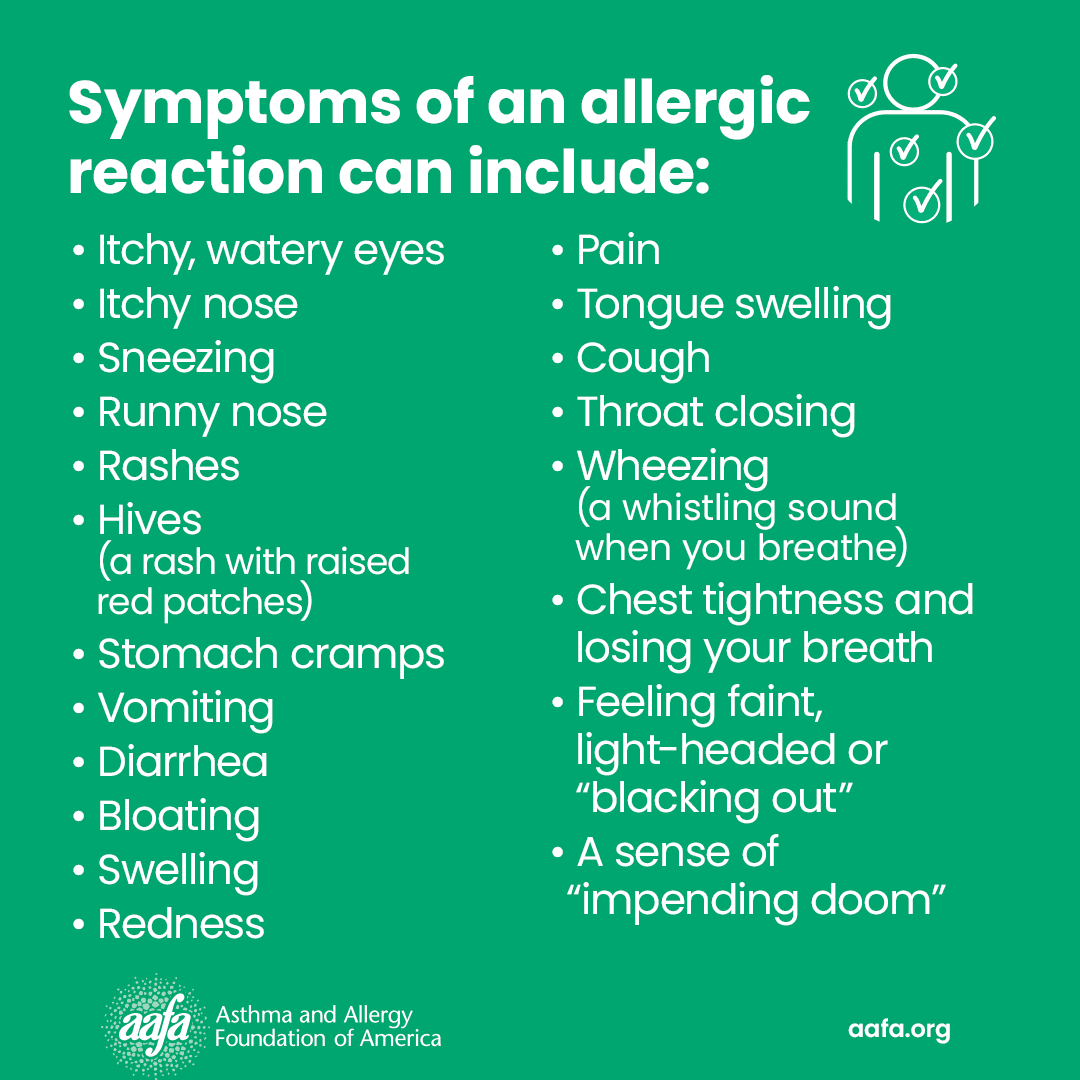
Epinephrine comes in a self-injectable device or a nasal spray. It is the most important medicine to give during a serious allergic reaction known as anaphylaxis. To work properly, you must give epinephrine within minutes of the first signs of serious allergic reaction to food, stinging insects, latex, and drugs/medicines.20 For more information:

Allergy Capitals
Your location can have an impact on your seasonal allergies. AAFA’s Allergy Capitals® report looks at the top 100 most challenging cities in the contiguous United States to live with seasonal pollen allergies.
Read the Report> [10]
 [11]
[11]Allergy Medicines List
Use the following tabs to find allergy medicine options. These are organized by how they are given/taken: by mouth, nose, eyes, skin, or injection (shot).
- Oral [12]
- Nasal sprays [12]
- Eye drops [12]
- Topical [12]
- Shots [12]
Oral / by mouth (pills, tablets, tabs, liquids) | ||||
| Drug/treatment name (may also be generic name) | Brand name | Type of medicine | Needs Rx? | Special notes |
| Cetirizine | Zyrtec® | Antihistamine | According to the FDA, this may cause drowsiness in some people, but most people are able to take this without any drowsiness Safe for use during pregnancy | |
| Desloratadine | Clarinex® | Antihistamine | Yes | Non-drowsy |
| Fexofenadine | Allegra® | Antihistamine | Non-drowsy | |
| Levocetirizine | Xyzal® | Antihistamine | According to the FDA, this may cause drowsiness in some people, but most people are able to take this without any drowsiness | |
| Loratadine | Claritin® | Antihistamine | Non-drowsy Safe for use during pregnancy | |
| Pseudoephedrine | SUDAFED® | Decongestant | Do not use for longer than 7 days May cause insomnia Requires ID to buy | |
| Fexofenadine + pseudoephedrine | Allegra-D® | Antihistamine and decongestant | Do not use for longer than 7 days May cause insomnia Requires ID to buy | |
| Loratadine + pseudoephedrine | Claritin-D® | Antihistamine and decongestant | Do not use for longer than 7 days May cause insomnia Requires ID to buy | |
| Desloratadine + pseudoephedrine | Clarinex-D® | Antihistamine and decongestant | Do not use for longer than 7 days May cause insomnia Requires ID to buy | |
| Cetirizine + pseudoephedrine | ZYRTEC-D® | Antihistamine and Decongestant | Do not use for longer than 7 days May cause insomnia Requires ID to buy | |
| Zafirlukast | ACCOLATE® | Leukotriene blocker | Yes | |
| Montelukast | SINGULAIR® | Leukotriene blocker | Yes | Has a black box warning for serious mental health side effects |
| Zileuton | Zyflo | Leukotriene blocker | Yes | |
| Dexamethasone | Corticosteroid | Yes | May be prescribed for severe symptoms Causes significant side effects and should not be used long term | |
| Methylprednisolone | Medrol® | Corticosteroid | Yes | May be prescribed for severe symptoms Causes significant side effects and should not be used long term |
| Prednisone | Corticosteroid | Yes | May be prescribed for severe symptoms Causes significant side effects and should not be used long term | |
| Prednisolone | ORAPRED ODT®, PEDIAPRED®, PRELONE™ | Corticosteroid | Yes | May be prescribed for severe symptoms Causes significant side effects and should not be used long term |
| Sublingual immunotherapy | Odactra (dust mite) Grastek, Oralair (grass) Ragwitek (ragweed) | Immune system therapy | Yes | Drops or tablets that go under the tongue First doses given by allergist under medical observation |
Nasal sprays (also called intranasal sprays) | ||||
| Drug/treatment name (may also be generic name) | Brand name | Type of medicine | Needs Rx? | Special notes |
| Budesonide | Rhinocort® | Corticosteroid | ||
| Fluticasone propionate | Flonase®, Flonase® SENSIMIST | Corticosteroid | ||
| Fluticasone propionate | XHance® (higher dose than Flonase) | Corticosteroid | Yes | |
| Flunisolide | Corticosteroid | Yes | ||
| Triamcinolone acetonide | Nasacort® | Corticosteroid | ||
| Mometasone furoate | Nasonex™ | Corticosteroid | ||
| Ciclesonide | Omnaris™ | Corticosteroid | Yes | |
| Beclamethasone | QNASL® | Corticosteroid | Yes | |
| Azelastine | Astepro® | Antihistamine | May cause drowsiness in some people | |
| Oxymetazoline | Afrin® | Decongestant | ||
| Oxymetazoline | Vicks Sinex™ | Decongestant | ||
| Phenylephrine | Neo-Synephine | Decongestant | ||
| Cromolyn sodium | NasalCrom® | Mast cell stabilizer | To be effective, must be taken 3-6 times a day every day during allergy season | |
| Epinephrine | neffy® | Emergency treatment | Yes | For serious allergic reactions such as anaphylaxis |
Eye drops | ||||
| Drug/treatment name (may also be generic name) | Brand name | Type of medicine | Needs Rx? | Special notes |
| Azelastine | Antihistamine | Yes | ||
| Bepreve® | Antihistamine | Yes | ||
| Epinastine | Antihistamine | Yes | ||
| Alcaftadine | LASTACAFT® | Antihistamine | ||
| Naphazoline and pheniramine maleate | Opcon-A® | Antihistamine | ||
| Ketotifen | ZADITOR® | Antihistamine | ||
| Olopatadine | Pataday® | Antihistamine | ||
Topical / on skin (creams, ointments) | ||||
| Drug/treatment name (may also be generic name) | Brand name | Type of medicine | Needs Rx? | Special notes |
| Betamethasone | BETA-VAL™, DIPROLENE®, | Corticosteroid | Yes | |
| Clobetasol | CLOBEX®, IMPOYZ® | Corticosteroid | Yes | |
| Fluocinonide | VANOS® | Corticosteroid | Yes | |
| Fluticasone | Corticosteroid | Yes | ||
| Hydrocortisone (strengths above 1%) | ALA-CORT®, LOCOID®, LOCOID LIPOCREAM®, MI-Cort HC™, Texacort™ | Corticosteroid | Yes | |
| Hydrocortisone (1% or less concentration) | Corticosteroid | Lower strength options available OTC | ||
| Mometasone | Corticosteroid | Yes | ||
| Triamcinolone | TRIDERM™ | Corticosteroid | Yes | |
Injections (shots) | ||||
| Drug/treatment name (may also be generic name) | Brand name | Type of medicine | Needs Rx? | Special notes |
| Omalizumab | Xolair®, Omlyclo | Biologic, a type of immune system therapy | Yes | Not for emergency treatment of allergic reactions, including anaphylaxis |
| Allergy shots | Immune system therapy | Yes | Must always be given in allergist’s office under observation | |
| Epinephrine | Auvi-Q, EpiPen | Emergency treatment | Yes | For serious allergic reactions Also available as a nasal spray |
Allergy Medicines List
Use the following tabs to find allergy medicine options. These are organized by how they are given/taken: by mouth, nose, eyes, skin, or injection (shot).
- Oral [12]
- Nasal sprays [12]
- Eye drops [12]
- Topical [12]
- Shots [12]
Oral / by mouth (pills, tablets, tabs, liquids)
ANTIHISTAMINES
Cetirizine, Zyrtec®
OTC
Special notes:
- According to the FDA, this may cause drowsiness in some people, but most people are able to take this without any drowsiness
- Safe for use during pregnancy
Desloratadine, Clarinex®
Rx
Special notes:
- Non-drowsy
Fexofenadine, Allegra®
OTC
Special notes:
- Non-drowsy
Levocetirizine, Xyzal®
OTC
Special notes:
- According to the FDA, this may cause drowsiness in some people, but most people are able to take this without any drowsiness
Loratadine, Claritin®
OTC
Special notes:
- Non-drowsy
- Safe for use during pregnancy
DECONGESTANTS
Pseudoephedrine, SUDAFED®
OTC
Special notes:
- Do not use for longer than 7 days
- May cause insomnia
- Requires ID to buy
ANTIHISTAMINE + DECONGESTANT COMBOS
Fexofenadine + pseudoephedrine, Allegra-D®
OTC
Special notes:
- Do not use for longer than 7 days
- May cause insomnia
- Requires ID to buy
Loratadine + pseudoephedrine, Claritin-D®
OTC
Special notes:
- Do not use for longer than 7 days
- May cause insomnia
- Requires ID to buy
Desloratadine + pseudoephedrine, Clarinex-D®
OTC
Special notes:
- Do not use for longer than 7 days
- May cause insomnia
- Requires ID to buy
Cetirizine + pseudoephedrine, ZYRTEC-D®
OTC
Special notes:
- Do not use for longer than 7 days
- May cause insomnia
- Requires ID to buy
LEUKOTRIENE BLOCKERS
Zafirlukast, ACCOLATE®
RX
Montelukast, SINGULAIR®
Rx
Special notes:
- Has a black box warning for serious mental health side effects
Zileuton, Zyflo
Rx
CORTICOSTEROIDS
Dexamethasone
Rx
Special notes:
- May be prescribed for severe symptoms
- Causes significant side effects and should not be used long term
Methylprednisolone, Medrol®
Rx
Special notes:
- May be prescribed for severe symptoms
- Causes significant side effects and should not be used long term
Prednisone
Rx
Special notes:
- May be prescribed for severe symptoms
- Causes significant side effects and should not be used long term
Prednisolone, ORAPRED ODT®, PEDIAPRED®, PRELONE™
Rx
Special notes:
- May be prescribed for severe symptoms
- Causes significant side effects and should not be used long term
SUBLINGUAL IMMUNOTHERAPY
Odactra (dust mite)
Grastek, Oralair (grass)
Ragwitek (ragweed)
Drops or tablets that go under the tongue
First doses given by allergist under medical observation
Nasal sprays (also called intranasal sprays)
Antihistamines – OTC
Azelastine, Astepro®
Special notes:
- May cause drowsiness in some people
Corticosteroids – OTC
Budesonide, Rhinocort®
Fluticasone propionate, Flonase®, Flonase® SENSIMIST
Triamcinolone acetonide, Nasacort®
Corticosteroids – Rx
Fluticasone propionate, XHance®
higher dose than Flonase
Flunisolide
Ciclesonide, Omnaris™
Beclamethasone, QNASL®
Decongestants – OTC
Oxymetazoline, Afrin®
Oxymetazoline, Vicks Sinex™
Phenylephrine, Neo-Synephine
Mast cell stabilizer – OTC
Cromolyn sodium, NasalCrom®
Special notes:
- To be effective, must be taken 3-6 times a day every day during allergy season
Emergency treatment – Rx
Epinephrine, neffy®
Special notes:
- For serious allergic reactions (anaphylaxis)
Eye drops
ANTIHISTAMINES – OTC
Alcaftadine, LASTACAFT®
Naphazoline and pheniramine maleate, Opcon-A®
Ketotifen, ZADITOR®
Olopatadine, Pataday®
Antihistamines – Rx
Azelastine
Bepreve®
Epinastine
Topical / on skin (creams, ointments)
CORTICOSTEROID – OTC
Hydrocortisone (1% or less concentration)
Special notes:
- Lower strength options available OTC, stronger strengths require a prescription
CORTICOSTEROID – Rx
Betamethasone BETA-VAL™, DIPROLENE®
Clobetasol, CLOBEX®, IMPOYZ®
Fluocinonide, VANOS®
Fluticasone
Hydrocortisone (strengths above 1%), ALA-CORT®, LOCOID®, LOCOID LIPOCREAM®, MI-Cort HC™, Texacort™
Mometasone
Triamcinolone, TRIDERM™
Injections (shots)
IMMUNE SYSTEM THERAPY
Omalizumab, Xolair®, Omlyclo
Rx
Special notes:
- Biologic, a type of immune system therapy
- Not for emergency treatment of allergic reactions, including anaphylaxis
Allergy shots
Rx
Special notes:
- Must always be given in allergist’s office under observation
EMERGENCY TREATMENT
Epinephrine, Auvi-Q, EpiPen
Special notes:
- Emergency treatment for serious allergic reactions
- Needs a prescription to obtain, but in some cases can be given to someone without a prescription (e.g. many states allow schools or public places to stock this medicine for emergencies)
- Also available as a nasal spray
ALLERGIC EMERGENCY
If you think you are having a serious allergic reaction (known as anaphylaxis), use epinephrine right away.
If you do not have epinephrine, call 911.
Do not delay. Do not take antihistamines in place of epinephrine. Epinephrine is the most effective treatment for anaphylaxis.
Medical Review [13] February 2026 by Mitchell Grayson, MD. Med Communications, Inc. assisted with development and review of medical content.
References
- Akhouri, S. & House, S. A. Allergic Rhinitis. (2023, July 16). Allergic Rhinitis. In StatPearls. StatPearls Publishing. Retrieved February 17, 2026, from: https://www.ncbi.nlm.nih.gov/books/NBK538186/ [14]
- Dykewicz, M. S., Wallace, D. V., Amrol, D. J., Baroody, F. M., Bernstein, J. A., Craig, T. J., Dinakar, C., Ellis, A. K., Finegold, I., Golden, D. B. K., Greenhawt, M. J., Hagan, J. B., Horner, C. C., Khan, D. A., Lang, D. M., Larenas-Linnemann, D. E. S., Lieberman, J. A., Meltzer, E. O., Oppenheimer, J. J., … Wang, J. (2020). Rhinitis 2020: A practice parameter update. Journal of Allergy and Clinical Immunology, 146(4), 721-767. https://doi.org/10.1016/j.jaci.2020.07.007 [15]
- Martins, L., Silvestre, S., & Monteiro, C. (2024). Risks Associated with the Use of Intranasal Corticosteroids: An Analysis of Adverse Reactions Reported to EudraVigilance. Healthcare (Basel), 12(19), 1923. https://doi.org/10.3390/healthcare12191923 [16]
- Gabros, S., Nessel, T. A., & Zito P. M. (2025, April 26). Topical Corticosteroids. In StatPearls. StatPearls Publishing. Retrieved February 17, 2026, from: https://www.ncbi.nlm.nih.gov/books/NBK532940/ [17]
- Hodgens, A. & Sharman, T. (2023, May 1). Corticosteroids. In StatPearls. StatPearls Publishing. Retrieved February 17, 2026, from: https://www.ncbi.nlm.nih.gov/books/NBK554612/ [18]
- Farzam, K., Sabir, S., & O’Rourke MC. (2025, December 13). Antihistamines. In StatPearls. StatPearls Publishing. Retrieved February 17, 2026, from: https://www.ncbi.nlm.nih.gov/books/NBK538188/ [19]
- Naqvi, A., Patel, P., & Gerriets, V. (2024, May 6). Cetirizine. In StatPearls. StatPearls Publishing. Retrieved February 17, 2026, from: https://www.ncbi.nlm.nih.gov/books/NBK549776/ [20]
- Patel, P. & Akhondi H. (2025, December 13). Loratadine. In StatPearls. StatPearls Publishing. Retrieved February 17, 2026, from: https://www.ncbi.nlm.nih.gov/books/NBK542278/ [21]
- Sicari, V., Patel, P., & Zabbo, C. P. (2025, March 27). Diphenhydramine. In StatPearls. StatPearls Publishing. Retrieved February 17, 2026, from: https://www.ncbi.nlm.nih.gov/books/NBK526010/ [22]
- Gray, S. L., Anderson, M. L., Dublin, S., Hanlon, J. T., Hubbard, R., Walker, R., Yu, O., Crane, P. K., & Larson, E. B. (2015). Cumulative use of strong anticholinergics and incident dementia: a prospective cohort study. JAMA Internal Medicine, 175(3), 401-407. https://doi.org/10.1001/jamainternmed.2014.7663 [23]
- Cleveland Clinic. (2023, April 20). Nasal Decongestant. My Cleveland Clinic. Retrieved February 17, 2026, from: https://my.clevelandclinic.org/health/drugs/24923-nasal-decongestant [24]
- U.S. Food and Drug Administration. (2024, November 7). Key Information about Nonprescription, Over-the-Counter (OTC), Oral Phenylephrine. Retrieved February 17, 2026, from: https://www.fda.gov/drugs/understanding-over-counter-medicines/key-information-about-nonprescription-over-counter-otc-oral-phenylephrine [25]
- Minutello, K. & Gupta V. (2024, October 28). Cromolyn Sodium. In StatPearls. StatPearls Publishing. Retrieved February 17, 2026, from: https://www.ncbi.nlm.nih.gov/books/NBK557473/ [26]
- Choi, J. & Azmat, C. E. (2023, June 4). Leukotriene Receptor Antagonists. In StatPearls. StatPearls Publishing. Retrieved February 17, 2026, from: https://www.ncbi.nlm.nih.gov/books/NBK554445/ [27]
- U.S. Food and Drug Administration. (2018, February 6). What Are “Biologics” Questions and Answers. Retrieved February 17, 2026, from: https://www.fda.gov/about-fda/center-biologics-evaluation-and-research-cber/what-are-biologics-questions-and-answers [28]
- Genentech (2024). Xolair. Prescribing Information. http://www.gene.com/download/pdf/xolair_prescribing.pdf [29]
- American Academy of Allergy Asthma & Immunology. (2023, November 13). Allergy Shots (immunotherapy). Retrieved February 17, 2026, from: https://www.aaaai.org/tools-for-the-public/conditions-library/allergies/allergy-shots-(immunotherapy) [30]
- Cleveland Clinic. (2023, August 9). Allergy Shots. My Cleveland Clinic. Retrieved February 17, 2026, from: https://my.clevelandclinic.org/health/treatments/25194-allergy-shots [31]
- American Academy of Allergy Asthma & Immunology. (2024, January 10). What do you Need to Know About Allergy Tablets?. Retrieved February 17, 2026, from: https://www.aaaai.org/tools-for-the-public/conditions-library/allergies/allergy-tablets [32]
- Dalal, R. & Grujic, D. (2024, November 23). Epinephrine. In StatPearls. StatPearls Publishing. Retrieved February 17, 2026, from: https://www.ncbi.nlm.nih.gov/books/NBK482160/ [33]