Research and Reports
Allergy Capitals
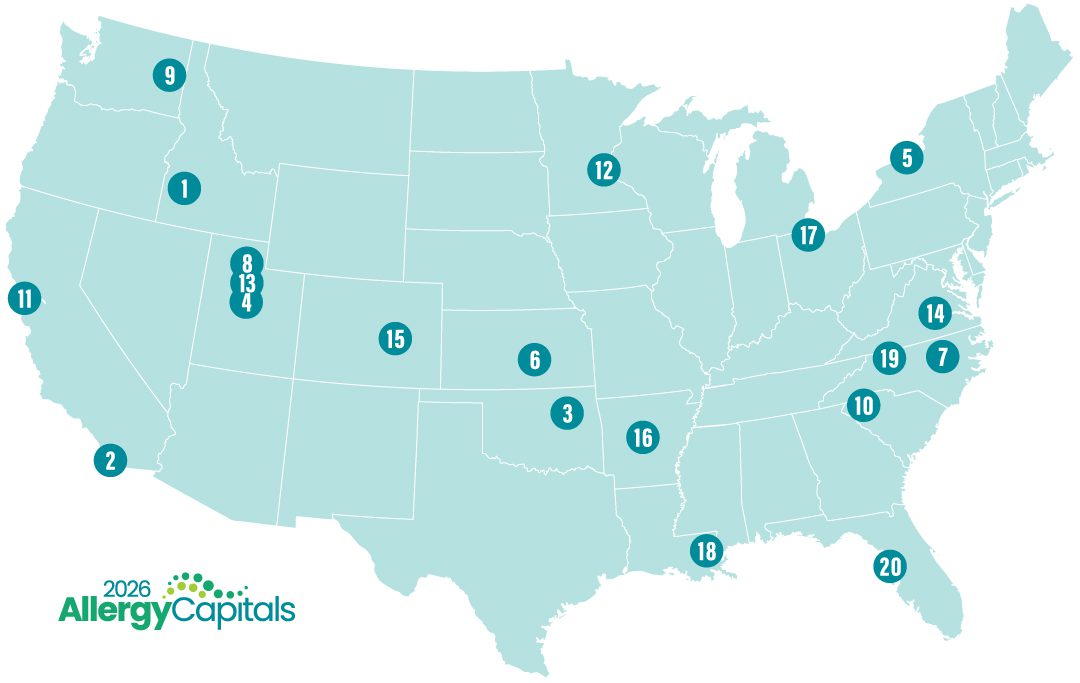
If you think pollen allergies are getting worse, you’re not wrong. Longer, more intense pollen seasons caused by the impact of climate change mean allergy symptoms hit harder and last longer. Some parts of the United States now experience pollen (tree, grass, or weed) year-round. Warmer temperatures also trap heat in urban areas, increasing air pollution, and stimulating pollen production. The Asthma and Allergy Foundation of America’s (AAFA) Allergy Capitals® report ranks the largest 100 cities in the contiguous (“lower 48”) U.S. by how challenging they are to live in when you have pollen allergy.
With this report, AAFA seeks to help people recognize, prevent, and manage seasonal allergies. In this year’s report you will find:
- Tips and treatments to help you manage and control your allergy symptoms – it can be done!
- Information about tree, grass, and weed pollen
- How mold affects pollen allergy season
- The impact of climate change and how to take action
- Data to help support community-based solutions for addressing the underlying issues making living with seasonal allergies challenging
Allergy Capitals 2026
Climate change may be responsible for major shakeups in this year’s report. Intense rainstorms, warmer temperatures, and drought triggered a more pollen spikes and longer pollen seasons in the West.
Download PDFs
2026 Allergy Capitals® – Full Ranking List of 100 U.S. Metro Areas [2]
Pollen seasons are getting longer and more intense
Climate change is leading to longer and more intense allergy seasons.1,2,3 Warmer temperatures mean plants start growing sooner and they produce more highly allergenic pollen. Allergenicity means the strength of the allergic response to pollen.
Extreme weather driven by climate change may also stimulate more pollen production or longer pollen seasons.
Our report assesses 3 pollen types responsible for allergies:
 [4]
[4]
 [5]
[5]Pollen seasons are getting longer and more intense
Climate change is leading to longer and more intense allergy seasons. 6,7,8 Warmer temperatures mean plants start growing sooner and they produce more highly allergenic pollen. Allergenicity means the strength of the allergic response to pollen.
Extreme weather driven by climate change may also stimulate more pollen production or longer pollen seasons.
Our report assesses 3 pollen types responsible for allergies:
[4] [5]Report ranking scores
The report ranks the 100 most populous cities in the contiguous United States by their:
- Tree, grass, and weed pollen scores (how many days each city has high or very high pollen counts)
- Over-the-counter allergy medicine use
- Availability of board-certified allergists/immunologists
 [6]
[6] [7]
[7] [8]
[8]Report ranking scores
The report ranks the 100 most populous cities in the contiguous United States by their:
- Tree, grass, and weed pollen scores (how many days each city has high or very high pollen counts)
- Over-the-counter allergy medicine use
- Availability of board-certified allergists/immunologists
[6] [7] [8]More than 106 million people in the United States have allergies and/or asthma.
Pollen is a significant trigger that worsens several health conditions:
 [6]
[6] [9]
[9] [10]
[10] [11]
[11]Millions
Exact number unknown for people with pollen allergy
82M
People with seasonal allergic rhinitis which is triggered by pollen or mold
28M
People with asthma and most have allergic asthma
34-68M
People with eye allergy
 [12]
[12] [13]
[13] [6]
[6] [14]
[14]2M
People with nasal polyps
30M
People with eczema
10-20%
of people with allergic rhinitis have pollen food allergy syndrome
485k
People with eosinophilic esophagitis (EoE)
More than 106 million people in the United States have allergies and/or asthma.
Pollen is a significant trigger that worsens several health conditions:
[6]Millions
Exact number unknown for people with pollen allergy
[9]82M
People with seasonal allergic rhinitis which is triggered by pollen or mold
[10]28M
People with asthma and most have allergic asthma
[11]34-68M
People with eye allergy
[12]2M
People with nasal polyps
[13]30M
People with eczema
[6]10-20%
of people with allergic rhinitis have pollen food allergy syndrome
[14]485k
People with eosinophilic esophagitis (EoE)
Managing your pollen allergies no matter where you live
Allergies affect people everywhere. If you have seasonal pollen allergies, you can manage your allergy symptoms with self-care and an allergy treatment plan. Doing this will also help you keep your allergic asthma or other related allergic conditions well-controlled. There are many available and accessible options to help you find relief. Consider the tips and options below as you work with your doctor to create your allergy treatment plan.
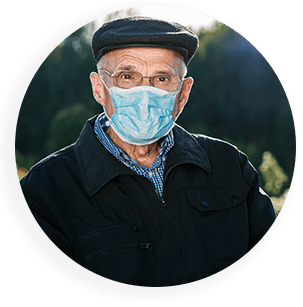
STEP 1: Prevent Pollen From Getting Into Your Eyes, Nose, Mouth, and Lungs
Avoiding or reducing your contact with pollen will decrease your symptoms. During your pollen season:
- Check pollen counts or forecasts daily
- Take steps to block pollen from getting into your home. Use AAFA’s Healthier Home Checklist [15] for a room by room guide
- Rinse out your nose with a saline nasal rinse. Shower before bed to remove pollen from your body
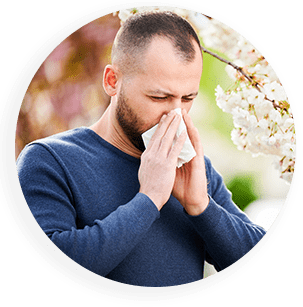
STEP 2: Use Allergy Medicines to Control Your Symptoms
There are many over-the-counter (OTC) and prescription (Rx) options to help you prevent or treat allergy symptoms:
- Use AAFA’s Allergy Medicine Guide [7] to learn about your options
- Start allergy medicines a couple weeks before your allergy season begins for the best results
- Discuss your allergy treatment plan in detail with your doctor

STEP 3: Consider Immune System Treatments
If you do not get complete relief from medicines that treat allergy symptoms, talk with your allergy doctor about other options including:
- Immunotherapy (like allergy shots)
- Biologic treatments (complex medicines that target specific parts of the body’s immune system process
Managing your pollen allergies no matter where you live
Allergies affect people everywhere. If you have seasonal pollen allergies, you can manage your allergy symptoms with self-care and an allergy treatment plan. Doing this will also help you keep your allergic asthma or other related allergic conditions well-controlled. There are many available and accessible options to help you find relief. Consider the tips and options below as you work with your doctor to create your allergy treatment plan.
STEP 1: Prevent Pollen From Getting Into Your Eyes, Nose, Mouth, and Lungs
Avoiding or reducing your contact with pollen will decrease your symptoms. During your pollen season:
- Check pollen counts or forecasts daily
- Take steps to block pollen from getting into your home. Use AAFA’s Healthier Home Checklist [15] for a room by room guide
- Rinse out your nose with a saline nasal rinse. Shower before bed to remove pollen from your body
STEP 2: Use Allergy Medicines to Control Your Symptoms
There are many over-the-counter (OTC) and prescription (Rx) options to help you prevent or treat allergy symptoms:
- Use AAFA’s Allergy Medicine Guide [7] to learn about your options
- Start allergy medicines a couple weeks before your allergy season begins for the best results
- Discuss your allergy treatment plan in detail with your doctor
STEP 3: Consider Immune System Treatments
If you do not get complete relief from medicines that treat allergy symptoms, talk with your allergy doctor about other options including:
- Immunotherapy (like allergy shots)
- Biologic treatments (complex medicines that target specific parts of the body’s immune system process
About the Report
AAFA’s 2026 Allergy Capitals® report provides insight into the factors that influence seasonal allergies. The report uses data to rank places by how challenging these locations are for people with pollen allergies. AAFA only evaluates data from the top 100 populated places (based on metropolitan statistical areas or MSAs) in the contiguous (“lower 48”) states for this report. MSAs are cities and their surrounding areas (like suburbs and nearby rural areas). The report does not reflect:
- Cities and areas not in the top 100 list by population size
- Completely rural areas that are not located within a metropolitan statistical area
- Anchorage, Alaska and Honolulu, Hawaii due to lack of matching data with other cities, counties, states
The factors impacting the rankings include:
- Tree, grass, and weed pollen scores
- Over-the-counter allergy medicine use
- Availability of board-certified allergists/ immunologists
With this report, AAFA seeks to help people recognize, prevent, and manage seasonal allergies. The 2026 rankings show the direct impact of severe weather (driven by climate change) on pollen production. Places that used to be better than average are shockingly now at the top of the list. AAFA is committed to ensuring people with allergies and asthma can access the care they need no matter where they live.
Frequently Asked Questions about Allergy Capitals
What does it mean if I live in an Allergy Capital lower on the list? Does that mean pollen allergies are better there?
You may still be greatly affected by seasonal allergies. On one or more of the ranked factors, your city may be doing better compared to other cities. For example, your city may have more allergists available compared to other cities.
What does it mean if my city isn’t on the report?
AAFA’s Allergy Capitals report ranks the top 100 populated metro areas in the United States. If your hometown is near a major city, your area may be included in the metro area of the major city. For example, the Seattle metropolitan area includes Tacoma, Bellevue, Everett, and all cities and suburbs in the surrounding area.
If your city’s population is lower than the population of the 100th most populated city, then your city/town will not be ranked. You may be greatly affected by seasonal allergies, but your town is not reflected in the report.
Is this report in real-time?
The report’s rankings are based on last year’s data. Your area’s pollen counts may differ this year, especially if your region experiences weather changes like increased rainfall.
My allergy symptoms are so bad, I’m pretty sure the ranking is wrong. How is this calculated?
Remember, this is based on last year’s data. Also, the ranking is based on a score that combines different complex factors. It is also a relative ranking – so it compares city to city. If one city moves up or down on the ranking due to its score, it affects the ranking of all the rest. This means a city could move up or down on the list from one year to the next even if nothing changed in that city.
Acknowledgements
The 2026 Allergy Capitals report is an independent research project of the Asthma and Allergy Foundation of America and made possible by support from Opella, makers of Allegra. AAFA would also like to thank Pollen Sense, Komodo Health, Circana, and Med Communications, Inc. for their support with data and report content. The views and opinions expressed in this report are those of the AAFA authors and do not necessarily reflect the policies or positions of the sponsors or other individuals, organizations, or companies.
Recommended Citation
Asthma and Allergy Foundation of America, (2026). 2026 Allergy Capitals. Retrieved from allergycapitals.org.
Closed
References
- Singh, A. B., & Kumar, P. (2022). Climate change and allergic diseases: An overview. Frontiers in Allergy, 3, 964987. https://doi.org/10.3389/falgy.2022.964987 [17]
- Poole, J. A., Barnes, C. S., Demain, J. G., Bernstein, J.A., Padukudru, M. A., Sheehan, W. J., Fogelbach, G. G., Wedner, J., Codina, R., Levetin, E., Cohn, J. R., Kagen, S., Portnoy, J. M., & Nel, A. E. (2019). Impact of weather and climate change with indoor and outdoor air quality in asthma: A work group report of the AAAAI Environmental Exposure and Respiratory Health Committee. Journal of Allergy and Clinical Immunology, 143(5), 1702–1710. https://doi.org/10.1016/j.jaci.2019.02.018 [18]
- Ziska, L. H., Makra, L., Harry, S. K., Bruffaerts, N., Hendrickx, M., Coates, F., Saarto, A., Thibaudon, M., Oliver, G., Damialis, A., Charalampopoulos, A., Vokou, D., Heidmarsson, S., Gudjohnsen, E., Bonini, M., Oh, J.-W., Sullivan, K., Ford, L., Brooks, G. D., & Myszkowska, D. (2019). Temperature-related changes in airborne allergenic pollen abundance and seasonality across the northern hemisphere: A retrospective data analysis. The Lancet Planetary Health, 3(3), e124–e131. https://doi.org/10.1016/S2542-5196(19)30015-4 [19]