









Asthma
Flu (Influenza)
If you have asthma, protecting yourself from the flu is very important. The flu is a contagious respiratory illness caused by influenza viruses.
The flu can cause mild to severe illness. If left untreated, it could lead to pneumonia or other complications (serious health problems) including death. Complications may include ear infections, sinus infections, or miscarriage (pregnancy loss) in some cases. The people at highest risk are:
- People ages 65 and older
- Children under age 5
- People who are pregnant
- People with medical conditions such as asthma or other lung disease, heart disease, diabetes, weakened immune systems, and kidney disease
What Are Symptoms of the Flu?
The flu usually starts suddenly and may include these symptoms:
- Fever (often very high, 101° F or above)
- Headache
- Extreme tiredness or weakness
- Chills
- Constant cough
- Sore throat
- Runny or stuffy nose
- Body aches in bones and/or muscles
- Diarrhea and vomiting (more common in children)
Symptoms from other illnesses like COVID-19, the common cold, respiratory syncytial virus (RSV), allergies, or asthma can be similar to the flu and may be confusing. You can also be sick with more than one respiratory infection (such as COVID-19 and RSV) at the same time.
The respiratory illness symptom chart below from the Asthma and Allergy Foundation of America (AAFA) can help you learn the different symptoms for these various conditions.
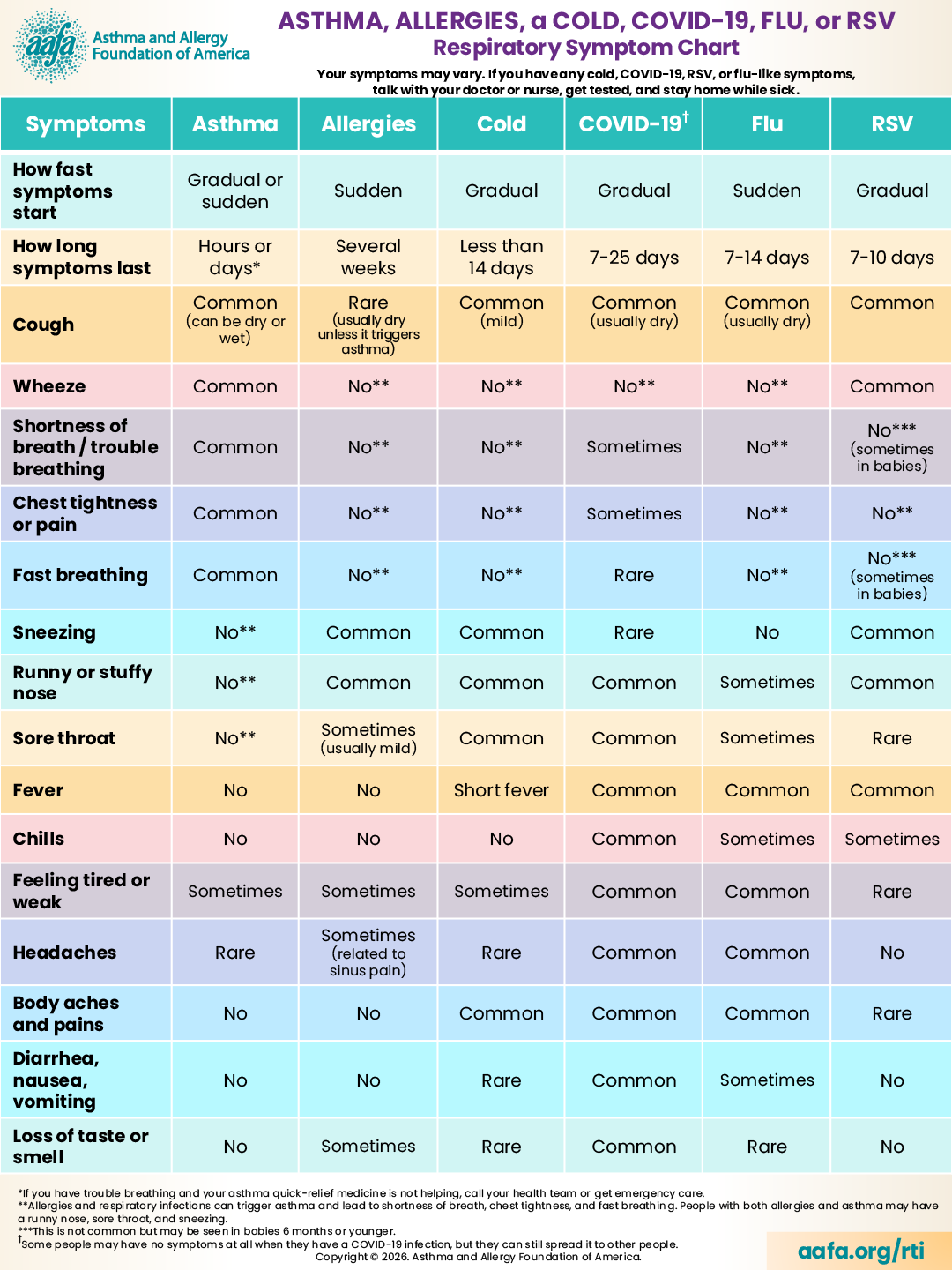 | 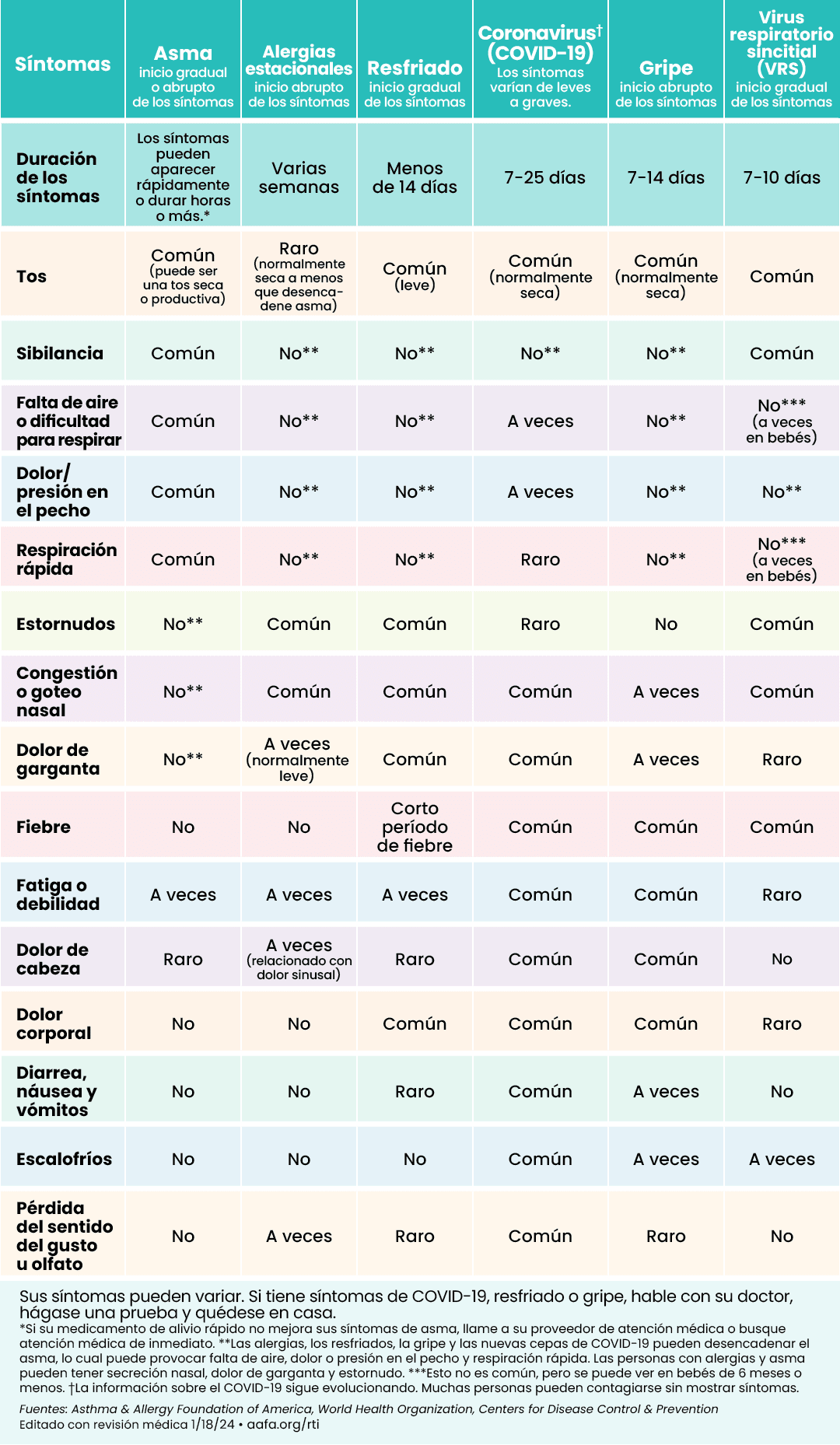 |
Click to see larger image (English) | Click to see larger image (Spanish) |
What Are Emergency Flu Symptoms?
Some signs and symptoms of the flu need emergency medical care right away.
Call 911 if your child has any of these emergency symptoms:
- Rapid breathing or trouble breathing
- Cyanosis – tissue color changes on mucus membranes (like tongue, lips, and around the eyes) and fingertips or nail beds – the color appears grayish or whitish on darker skin tones and bluish on lighter skin tones
- Not waking up, not interacting, or not conscious
- Serious or constant vomiting
- Severe dehydration
Get urgent medical care (go to an urgent care or emergency room) if your child has:
- Flu-like symptoms that seem to improve but return with worse fever and cough
- Fever with a rash
- Irritable and difficult to comfort (along with other flu symptoms)
- Other severe or concerning symptoms as listed above
Call your child’s doctor right away for:
- A fever over 100.4° F in a baby younger than 3 months old
- A fever of 105° F or higher in a child of any age, including teens
- A fever over 102° F in an infant 3-12 months old for more than 2 days
If you can’t reach your child’s doctor, take your child to the emergency department or call 911.
Adapted from Children’s Hospital Los Angeles and Mount Sinai
For adults, call 911 for any of these emergency symptoms:
- Rapid breathing or trouble breathing
- Pain in the chest or abdomen
- Sudden dizziness or frequent dizzy spells
- Confusion
- Not waking up, not interacting, or not conscious
- Severe or constant vomiting
What Is the Bird Flu (Also Known as Avian Flu, H5N1, or HPAI)?
The bird flu is a virus that is mostly found in wild birds, such as waterfowl, ducks, and geese. Recently, the bird flu has spread to poultry (chickens and turkeys), dairy cattle, cats, and other animals. Some U.S. poultry and dairy cattle workers have also gotten the bird flu. These workers had direct contact with birds and cattle infected with bird flu or with infected raw milk.1,2
The strains of this virus can spread quickly and cause severe respiratory symptoms, distress, and death.
Humans currently have a low risk of getting bird flu. There is no known person-to-person spread at this time.
This type of flu is known by several names including: bird flu, avian flu, H5N1, and HPAI – which stands for Highly Pathogenic Avian Influenza.
How Does the Bird Flu Spread?
The virus can spread to humans through direct contact with sick animals. Bird flu can spread in 5 different ways:
- Direct contact by touching infected animals and animal fluids like saliva, milk, and feces
- Drinking raw milk from an infected cow
- Splashing raw milk from an infected vow in your eyes, nose, or mouth
- Touching contaminated surfaces and then touching your eyes, nose, or mouth
- Through the air in the form of droplets you can breathe in or dust from the infected animals
Although the bird flu can spread from infected animals to humans, it is rare. When it does happen, the infected person has either been in direct contact with a sick animal or was exposed for a long period of time and not wearing the full protective gear (such as respiratory masks, gloves, or eye protection).2, 3
Public health officials are monitoring H5N1 bird flu to see if the virus changes to spread from human to human. At this time, there is no known person-to-person spread of bird flu.
What Are the Symptoms of Bird Flu?
Bird flu symptoms are similar to other influenza (flu) viruses. Symptoms of the bird flu in humans include:
- Red or crusty eyes (specific to the bird flu)
- Sore throat
- Runny or Stuffy nose
- Cough
- Trouble breathing
- Fatigue
- Headaches
There are some unique symptoms that are specific to bird flu like eye redness or crusting. Some people have also reported muscle or body aches, vomiting, and diarrhea. In addition, fever (100° F or higher) can be seen. These symptoms can be mild, but the disease can be serious and possibly deadly.4, 5
What Should I Do If I Think I Have Bird Flu?
If you have flu-like symptoms, call your doctor right away. Tell them about your possible exposure to animals or infected animals and ask if you might have the bird (or avian) flu. Also contact your local public health office.
How Do I Avoid Getting Bird Flu?
Take these steps to protect yourself from bird flu:
- Avoid direct contact with infected animals.
- Get the seasonal flu vaccine. While the seasonal flu vaccine will not protect against bird flu, getting this vaccine can lower the risk of being infected with both seasonal flu and bird flu at the same time. In addition, this reduces the chance of severe illness from seasonal flu.
- Avoid drinking or touching unpasteurized or raw dairy products. The bird flu virus and other germs can be in unpasteurized milk and dairy products. Pasteurized milk and dairy products are safe to eat.
- Cook poultry and eggs to an internal temperature of 165° F, which prevents humans from becoming infected with bird flu.
- Take precautions if you have a backyard flock. Separate your bird flock from other animals and pets. Avoid kissing or putting birds near or on your face. Wash your hands before and after you are around your birds. Do not touch sick or dead birds without wearing an N95 mask, gloves, and eye protection. Contact your vet or local animal control if your birds suddenly get sick or die.3,5
Are People with Asthma at High Risk for Complications from the Flu?
The flu can affect your lungs when you have asthma. It can cause inflammation (swelling) and narrowing of your airways. These changes could trigger or worsen asthma symptoms, such as cough, wheezing, shortness of breath, and chest tightness.
People with asthma are at a higher risk of having other health problems from the flu, such as pneumonia. Pneumonia is an infection of the lungs caused by viruses or bacteria. It can be serious for people with asthma.
If you have asthma, it is very important to protect yourself from the flu.
What Is the Best Treatment for the Flu?
If you think you have the flu, you can get tested at urgent care centers, walk-in clinics, or your local pharmacy. You can also use an at-home test kit. If you get flu-like symptoms or test positive, contact your doctor right away.
If possible, it is best to get tested within the first 1 to 2 days of getting sick. You may also need a doctor’s exam to tell if you have a complication from the flu, such as pneumonia.
There are antiviral drugs approved to treat the flu. Flu antiviral drugs are prescription medicines that can help your body fight against the flu virus. They can lessen symptoms, such as fever or body aches, and can also cut down on the amount of time you are sick. They may also reduce complications if you have asthma or other respiratory illnesses. If you take them early enough, you may have milder illness and recover faster.
Flu antivirals work best when started within 1 to 2 days after you start having flu symptoms, especially if you are at higher risk of complications from the flu, are very sick, or in the hospital with the flu. Children can also take flu antivirals.
A health care provider is best equipped to determine if you or your child needs antiviral treatment and which drug is most appropriate. People with asthma who start to have flu symptoms should talk with their doctor as soon as possible about the use of antiviral medicines.
There are 4 antiviral drugs recommended by the Centers for Disease Control and Prevention (CDC) to treat the flu:
- Baloxavir marboxil (Xofluza®)
- Oseltamivir phosphate (Tamiflu®)
- Peramivir (Rapivab®)
- Zanamivir* (Relenza®)
*The antiviral drug, Zanamivir, which is an inhaled powdered medication, is not recommended for people with asthma who develop the flu. It may cause wheezing, difficulty breathing, and tightening in the airways in people with asthma and other lung problems.6 Oral Oseltamivir is generally preferred in this situation.
Get a lot of rest, drink plenty of liquids, and avoid using alcohol and tobacco if you get the flu. Before taking over-the-counter medicines to help relieve flu symptoms, talk with your doctor. Some over-the-counter medicines or supplements can interfere with other medicines you may be taking.
How Does the Flu Spread?
The flu is contagious. The flu spreads in small droplets made when people talk, laugh, cough, and sneeze. These droplets travel in the air and can land in the mouths, eyes, or noses of nearby people. Less often, the flu spreads by touching something (such as doorknobs or tables) with the flu virus on it or by shaking hands and then touching your mouth or nose. You can spread the flu before you know you are sick and while you are sick.
The flu typically spreads in the United States from fall through spring each year.
How Can I Protect Myself and Other People from the Flu?
Here is what you can do to avoid the flu:
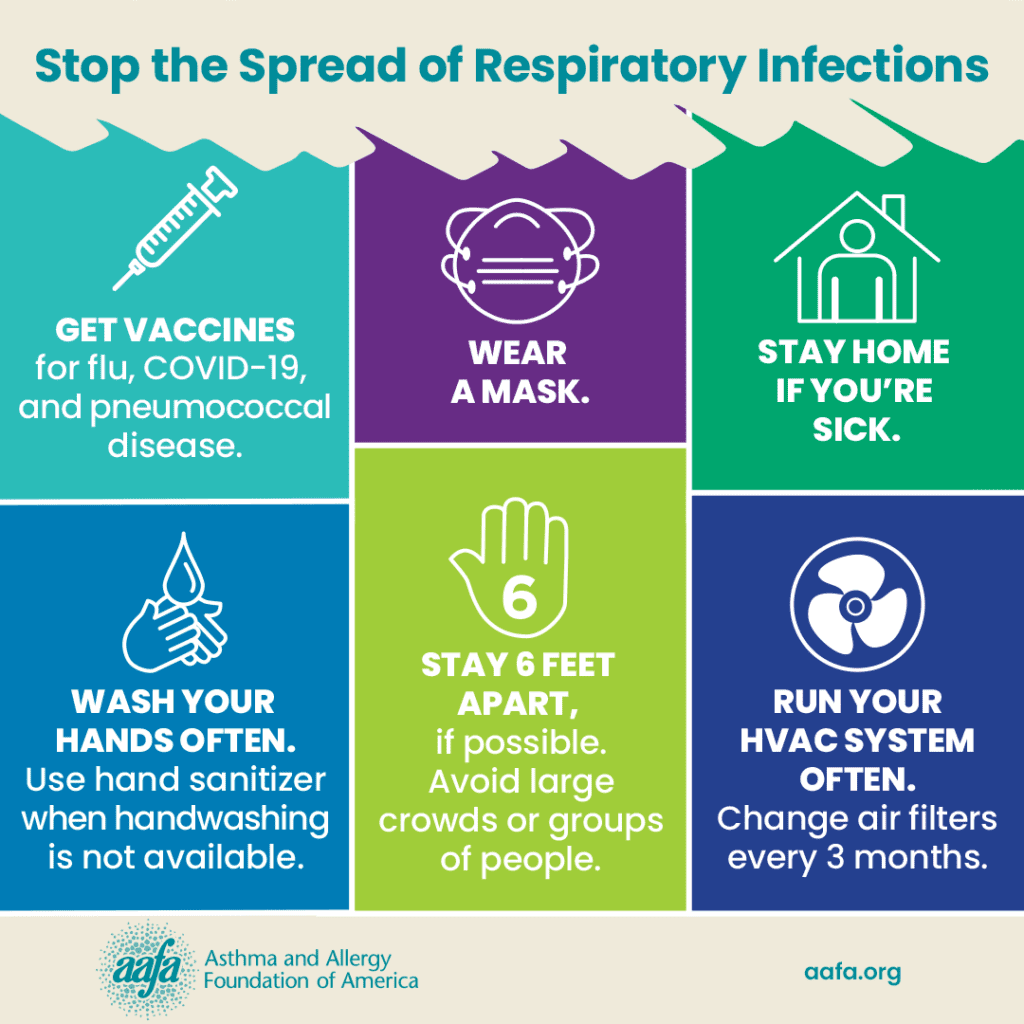
- Get the flu vaccine every year. All people who are 6 months and older should get a flu vaccine, with few exceptions. See the sections “Who Should Get the Flu Vaccine?” and “Who Should Not Get the Flu Vaccine?”
- Make it a family affair. Vaccinate the whole family with the flu vaccine to protect family members who have asthma.
- Prevent exposure. The flu can be very contagious. Wash your hands well for at least 20 seconds and often (or use alcohol-based hand sanitizer if soap and water aren’t available), don’t touch your face, and don’t share food or utensils. If possible, avoid people who are sick. Wear a mask when you are in close contact with someone who is ill or in crowded indoor spaces when the flu is spreading. And stay home if you are sick to prevent spreading the flu to other people.
- Talk with your doctor. Update your Asthma Action Plan with your doctor so you know what to do if you get sick.
- If you get sick with flu symptoms, call your doctor right away. People with asthma can quickly become sicker with the flu. Your doctor may recommend treatment with an antiviral medicine and/or a change to your regular asthma treatment.
Who Should Get the Flu Vaccine?
People who are 6 months and older should get a flu vaccine every year. Get a flu vaccine every year when it becomes available, usually between August and October.
Every year, new batches of the flu vaccine are made with different virus strains. The vaccine stimulates your body to make antibodies to help you fight off flu infection.
If you get the flu vaccine, you are less likely to catch the flu virus. And if you do get sick with flu, you are more likely to recover quicker and easier, as well as have a lower risk of complications. The flu vaccine can also help reduce your or your child’s risk of severe illness from more than one respiratory infection.
There are different flu vaccines for different ages. Some children may need two doses. A high-dose vaccine is available for people ages 65 and older.
The flu vaccine is available as a shot or a nasal spray. AAFA recommends that people with asthma of any age over 6 months get the flu shot. The CDC does not recommend the nasal spray for children ages 2 to 4 who have asthma or a history of wheezing in the past 12 months.
If you or your child (ages 5 and older) must have a needle-free option and your asthma is well-controlled, talk with your doctor about nasal spray vaccine options.
See the CDC’s full guidelines on the flu vaccine for more information.

The vaccine is safe. If you have asthma, the risks of flu complications are far greater than not getting the vaccine.
If you care for children with asthma or live with people with asthma, get the flu vaccine to protect them.2
Who Should Not Get the Flu Vaccine?
Most people can get a flu shot. Children younger than 6 months of age are too young to get a flu vaccine.
If you have severe, life-threatening allergies (anaphylaxis) to any ingredient in a flu vaccine (other than egg proteins), you should not get the shot.
Can I Get the Flu Vaccine If I Have an Egg Allergy?
If you have an egg allergy, you can safely get a flu shot. This is true no matter how severe your egg allergy was in the past. This includes people who have a history of a severe allergic reaction or anaphylaxis after eating egg or egg-containing foods.
Egg allergy is not a reason to avoid the flu vaccine. It is safe for ALL people with an egg allergy to receive an annual flu vaccine.

The following organizations recommend getting the flu vaccine every year, even if you have an egg allergy:
- Asthma and Allergy Foundation of America (AAFA)
- Centers for Disease Control and Prevention (CDC)
- American Academy of Pediatrics (AAP)
- American Academy of Allergy, Asthma, and Immunology (AAAAI)
- American College of Allergy, Asthma, and Immunology (ACAAI)
You can get any flu vaccine (shot or nasal spray) depending on the recommendations above if you have asthma. Talk with your doctor about which flu vaccine options are best for you. You can talk about risks and benefits of these vaccines at that time.
You do not need to be observed in a doctor’s office for 30 minutes after getting the vaccine if you have or had an egg allergy. The AAAAI, ACAAI, and CDC state that the vaccine is safe to give in any setting. There is no special waiting time or other precautions.4
Medical Review: February 2025 by John James, MD
Closed
References
- FACT SHEET: Highly Pathogenic Avian Influenza H5N1. (2024, August). Coalition to Stop Flu. https://www.cdph.ca.gov/Programs/CID/DCDC/pages/Bird-Flu.aspx
- (2025, February 24). H5 Bird Flu Current Situation. Centers for Disease Control and Prevention. Retrieved February 25, 2025, from https://www.cdc.gov/bird-flu/situation-summary/index.html.
- (2024, June 3). Current Situation: U.S. Bird Flu in Humans. Centers for Disease Control and Prevention. Retrieved February 25, 2025, from https://www.cdc.gov/bird-flu/situation-summary/inhumans.html
- Bird Flu (H5N1). (n.d.). National Council for Occupational Safety and Health. Retrieved February 6, 2025, from https://nationalcosh.org/resources/bird-flu .
- Bird Flu. (2025, January 15). California Department of Public Health. Retrieved February 25, 2025, from https://www.cdph.ca.gov/Programs/CID/DCDC/pages/Bird-Flu.aspx
- Treating Flu with Antiviral Drugs (2024, September 11). Centers for Disease Control and Prevention. Retrieved February 28, 2025 from https://www.cdc.gov/flu/treatment/antiviral-drugs.html.
- Flu and People with Asthma | Seasonal Influenza (Flu) | CDC. (2024). Cdc.gov. Retrieved September 13, 2024, from Flu & People with Asthma | CDC.
- Who Needs a Flu Vaccine. (2024). Centers for Disease Control and Prevention. Retrieved September 13, 2024, from Who Needs a Flu Vaccine | CDC.
- People who SHOULD NOT get a flu shot. Who Needs a Flu Vaccine. (2024). Centers for Disease Control and Prevention. Retrieved September 13, 2024, from Who Needs a Flu Vaccine | CDC
- Greenhawt, M., Turner, P. J., & Kelso, J. M. (2018). Administration of influenza vaccines to egg allergic recipients: A practice parameter update 2017. Annals of Allergy, Asthma & Immunology, 120(1), 49–52. https://doi.org/10.1016/j.anai.2017.10.020.
