










- This event has passed.
Type 2 Inflammation (Allergic Conditions) Week 2026
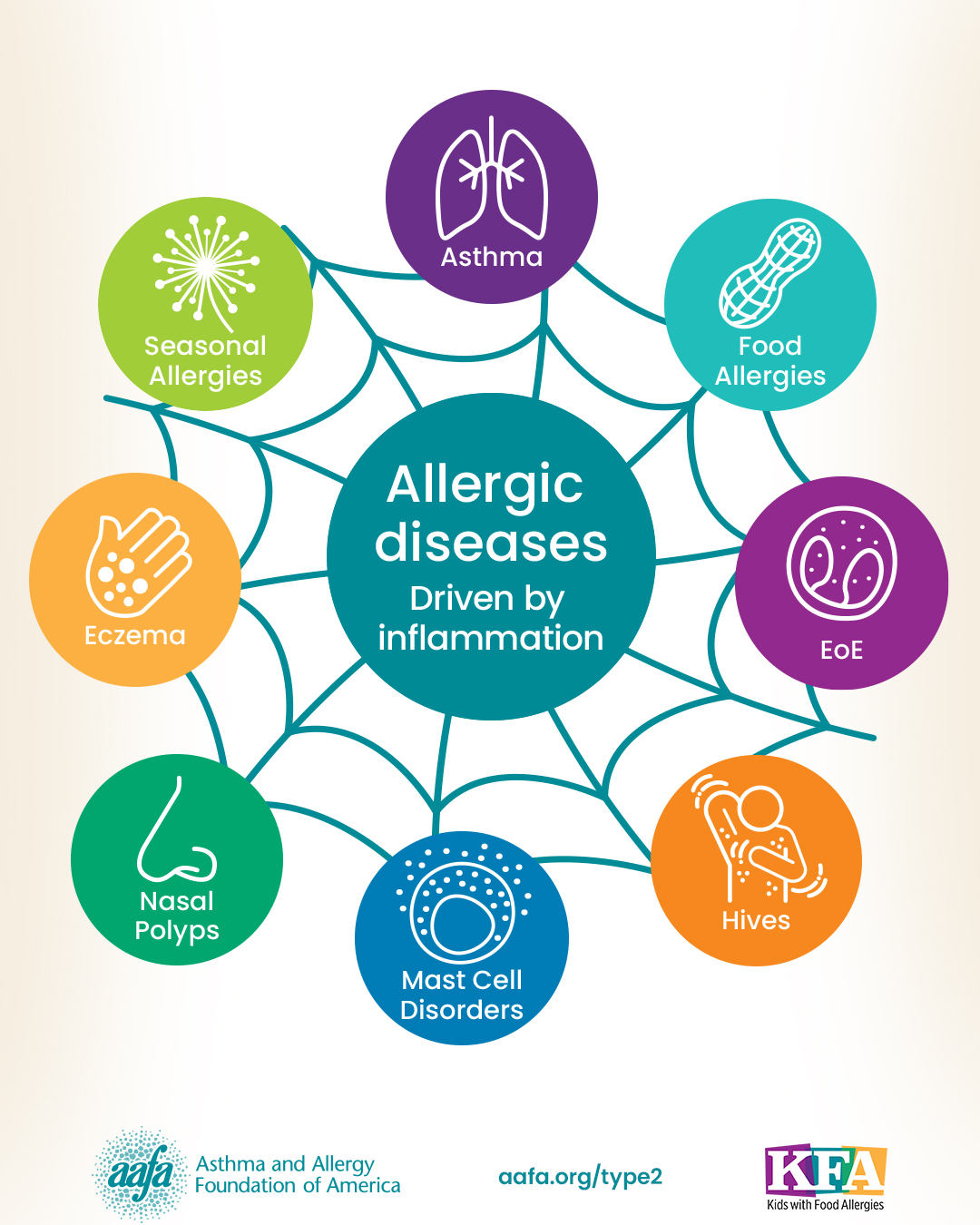
The Asthma and Allergy Foundation of America (AAFA) designates May 18-22 to be Type 2 Inflammation (Allergic Conditions) Awareness Week. Allergic conditions span a wide range, including asthma, seasonal allergies, eczema, hives, food allergies, nasal polyps, and mast cell disorders. This community of diseases are connected and often overlap. For example, it is common for babies who have eczema to then develop food allergies, seasonal allergies, and asthma – which is the leading chronic disease among children in the U.S.
These conditions are often connected by type 2 inflammation.
What Allergic Conditions Are Connected?
- Asthma
- Atopic dermatitis, a type of eczema
- Allergies (pollen, food, dust mite, mold, animal dander, latex, drug, and other)
- Eosinophilic esophagitis (EoE)
- Pollen food allergy syndrome (PFAS), also known as oral allergy syndrome (OAS)
- Nasal polyps, also known as chronic rhinosinusitis with nasal polyps
- Prurigo nodularis
- Mastocytosis and mast cell activation syndrome
It is common for people with one type of allergic condition to have more than one of these diseases. If you have symptoms like coughing, itching, congestion, sneezing, or difficulty eating foods, talk with your doctor.
For more information, visit:
May Is Asthma and Allergy Awareness Month: aafa.org/awareness
Type 2 Inflammation: aafa.org/type2