





Asthma
Asthma Peak Season
Emergency department visits for asthma begin to increase in September and October. Asthma peaks continue through the winter alongside respiratory infection season. To stay healthy and cut your chances of an asthma emergency, the Asthma and Allergy Foundation of America (AAFA) recommends 8 steps below.
Historically, September has been called Asthma Peak Month, and the third week of September has been called “Asthma Peak Week.” But data analysis by the Asthma and Allergy Foundation of America (AAFA) shows asthma “peaks” can happen in other months, especially during the winter.1
While asthma peaks can change based on time and place, September is an important time to raise awareness because it is when asthma attacks, emergency room visits, and hospital stays start to climb – especially in children.
Asthma is a disease that narrows the airways and makes it harder to breathe. The narrowing in the airways is caused by swelling (inflammation), small muscles squeezing around the airways (constriction), and extra mucus. This narrowing can get worse when a person with asthma:
- Breathes in substances that bother the lungs (called “irritants”)
- Has an allergic reaction
- Gets sick
What Causes Asthma Peak Season?
Starting in September and through the winter months, people with asthma come in contact with several asthma triggers at once:
- Back-to-school and respiratory illnesses: Crowded indoor spaces like schools increase the spread of respiratory infections like flu, COVID-19, RSV, and colds. Children often bring these illnesses home, spreading the illnesses to their families and older adults.
- Poor indoor air quality in schools: Many school buildings have poor ventilation, air pollution from nearby traffic and cleaning products, mold problems, and airborne allergens (pollen, dust mites, and animal dander).
- Ragweed pollen: The most common fall allergen peaks in September. For people with allergic asthma, exposure to ragweed pollen can trigger asthma symptoms.
- Outdoor mold growth: Decaying plant matter, fall rains, and humidity create perfect conditions for mold. Mold spores irritate airways and can worsen asthma and allergies.
- Indoor mold growth: Air conditioning can reduce mold growth because it removes humidity from the air. As the outdoor temperatures start to drop, people stop using air conditioning. This can affect the indoor air movement, ventilation, and humidity levels.
- Weather-driven changes: Sudden temperature changes, extreme heat or cold, humidity, thunderstorms, and wildfire smoke all add to the burden on lungs.
Being around all of these asthma triggers at the same time can make asthma harder to control.
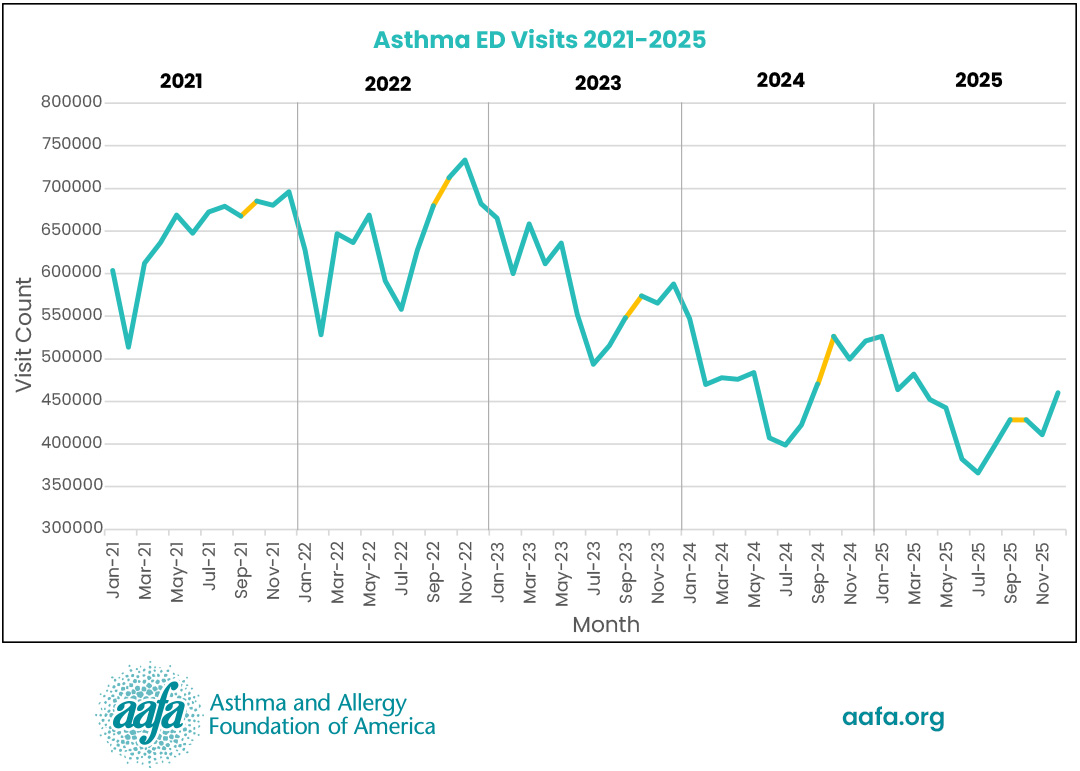
Emergency department visits for asthma from 2021 to 2025 show an increase around September (shown as yellow segments in the chart below). But they keep going up into the winter. The fewest asthma emergencies happen during the summer months.
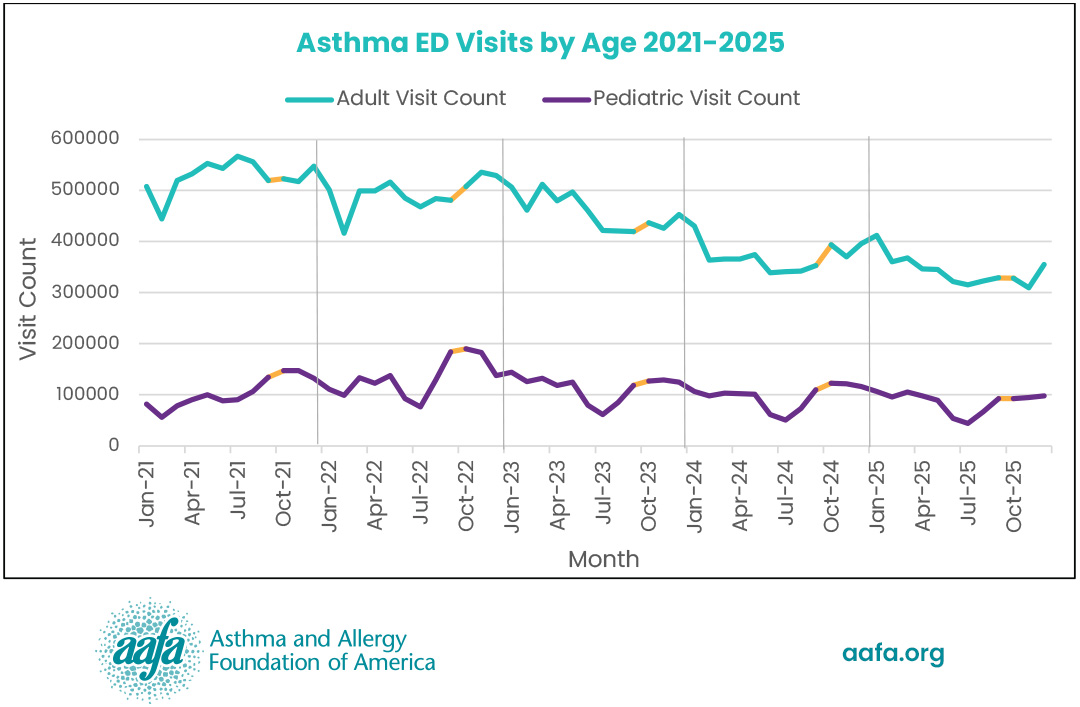
Overall peaks for asthma-related emergency department visits vary. But asthma emergencies in children tend to peak around September to October.1 September can be especially tough for kids who are exposed to back-to-school illnesses and poor indoor air quality in schools, weed pollen, and mold at the same time.
How Are Respiratory Infections and Asthma Peak Season Connected?
Respiratory illnesses like flu, COVID-19, respiratory syncytial virus (RSV), and colds are common asthma triggers.
People with asthma are at higher risk for having serious complications (other health issues), like pneumonia or even death from respiratory infections. For people living with asthma, respiratory infections often cause more emergency department visits, hospital stays and missed school and workdays. Getting sick with a respiratory infection can make it harder for someone with asthma to breathe, especially older adults or people with moderate to severe asthma.
Emergency department visits for asthma in children start to rise in September. They keep going up along with respiratory virus season. This lines up with kids going back to school in August and September. Close contact and crowded classrooms help illnesses spread more easily. Respiratory infection season also starts with the end of summer when people start spending more time indoors. Kids get sick at school and then spread the illness to adults and young children at home.
Older adults have a higher risk of death from asthma, as well as respiratory infections. Older adults have weaker immune systems that make them more likely to have serious complications.
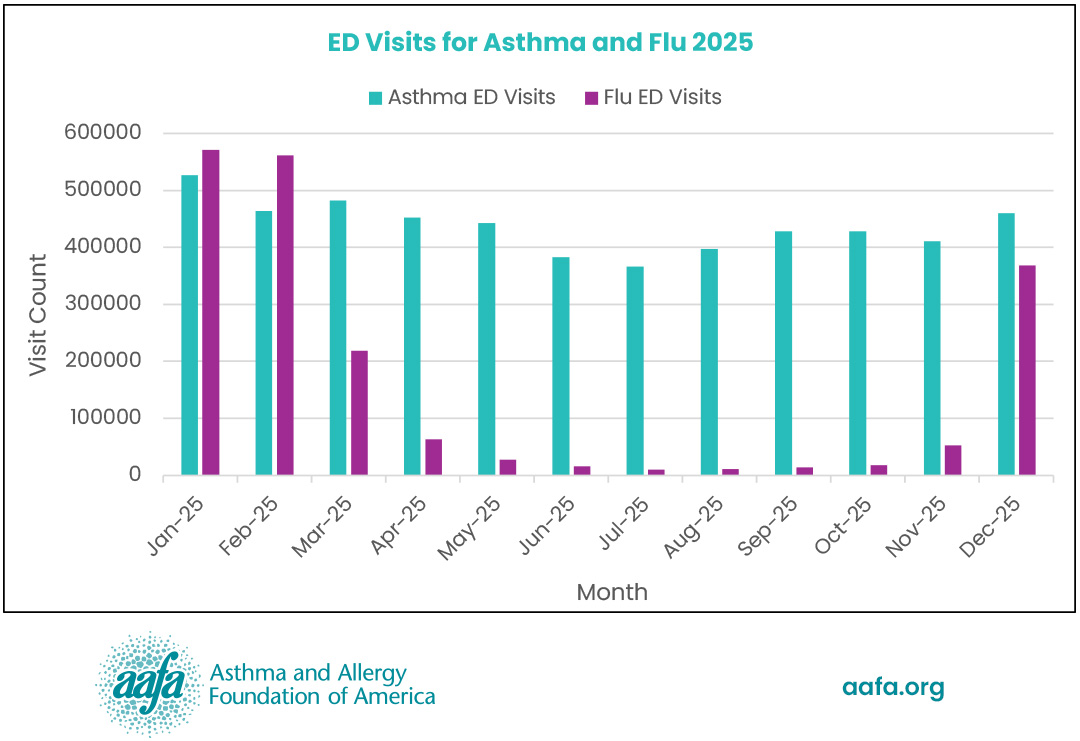
In 2025, the months with the most asthma-related emergency department visits (January, February, March, and December) are also the months with the most flu-related visits.1


8 Steps to Staying Healthy and Controlling Asthma During Asthma Peak Season
The best way to manage your asthma is to prevent symptoms before they begin.
- Schedule an appointment with your doctor or asthma specialist before Asthma Peak Season begins or as soon as possible. Be ready to talk about current symptoms, medicines, and triggers.
- Talk with your doctor about creating an Asthma Action Plan. Take your asthma medicines as prescribed by your doctor. If you move into the Yellow/Caution Zone of your plan, follow your plan early so you can get back in the Green/Good to Go Zone.
- Get your vaccines. They take about 2 weeks to take effect in your body, so get them as soon as they are available. Yearly vaccines are usually available starting in August/September.
- Flu: People with asthma who are more likely to have severe complications (such as. pneumonia or death) from the flu. AAFA recommends all people ages 6 months and older get a flu vaccine.
- COVID-19: People with asthma who don’t get the COVID vaccine have a higher chance of having severe asthma flares and getting long COVID. AAFA recommends all people ages 6 months and older get a COVID-19 vaccine.
- Respiratory syncytial virus (RSV): Children who get RSV when they are younger are at a higher risk of developing pneumonia and asthma. Adults with asthma and all older adults who get sick with RSV have a high risk of severe illness and complications. An RSV vaccine is available for some adults. An RSV immunization medicine is available for babies and toddlers. AAFA recommends the RSV vaccine for babies (including during weeks 32 to 36 of pregnancy), adults ages 18 to 59 with a risk factor such as asthma, and all people 60 years and older.
- Pneumococcal disease: For people with asthma, pneumonia can be very serious. AAFA recommends adults who are 19 to 49 years old with asthma and any adults aged 50 and older get the pneumococcal vaccine.
- Take steps to avoid getting sick. Wash your hands often and for at least 20 seconds. Avoid touching your eyes, mouth, and nose, especially during cold and flu season. Stay away from people who are sick as much as possible.
- Wear a mask. When respiratory illnesses are spreading, wear a good-fitting N95 mask in crowded indoor spaces. Also wear N95 masks if wildfire smoke is in your area or if you are cleaning up after a natural disaster or flood. Masks can also help if you have pollen or mold allergy.
- Good ventilation and air filters can improve your indoor air quality (IAQ). HEPA-certified air cleaners, HEPA filters on your HVAC system, exhaust fans, and open doors/windows can improve the air in your indoor spaces. Talk with your child’s school about their IAQ policies. Good IAQ is important to reduce air pollution, airborne allergens, and the spread of respiratory infections.
- If you are allergic to ragweed or mold, try to limit your exposure to those allergens. AAFA has more information on managing and treating ragweed allergy and mold allergy.
- Take care of your health. Adequate sleep and water, a healthy diet, and exercise are important. Take action to keep your stress levels down.
What Should I Do If I Have an Asthma Episode or Attack?
No matter how hard you try to keep your asthma under control, you may still have asthma symptoms. Follow your Asthma Action Plan and the steps below when you have symptoms:
- Take your quick-relief (“rescue”) inhaler. Contact your doctor as soon as possible once you realize you are in the Yellow/Caution Zone or are sick. If you are sick and think you may be contagious, call your doctor first to avoid spreading the illness to other people.
- Tell your doctor all the symptoms you have and how long you have had them.
- Let the doctor know what medicines you have been taking and how often – including prescription and over-the-counter medicines.
- Follow your new treatment plan if your doctor gives you one. Asthma can be serious.
- Know the Red/Danger Zone signs on your Asthma Action Plan. If your symptoms do not get better after taking your asthma medicine, call 911 or go directly to the emergency room.
Acknowledgement: This content is developed independently by AAFA and made possible by support from Amgen.
Medical Review: August 2024 by Neeta Odgen, MD
Editorial Review and Updated: August 2026 by Melanie Carver, Chief Mission Officer. Updates include new data analysis from “The Influence of Time and Place on Asthma: ASTHMA PEAK SEASON” in AAFA’s 2026 Asthma Capitals® report and most recent information for RSV vaccination.
Closed
Reference
- Asthma and Allergy Foundation of America, (2026). 2026 Asthma Capitals. Retrieved from asthmacapitals.org.
Data source for ED visit rates:
For each MSA, AAFA obtained the total number of emergency department visits where an asthma and flu ICD-10 codes were included as a diagnosis from the Komodo Healthcare Map for the most recent calendar year (2025).